
2025 to 2026
The Tale of Genji seriously tested the extent to which I would finish a book which I have started. I generally follow that principle when it comes to fiction, if not non-fiction. I can’t say I enjoyed the first thirty or so chapters charting Genji’s countless seductions, and I was very close to giving up. However, the reputation and extraordinary background of this work – of which I was embarrassingly ignorant – kept me going. Almost duty-bound. Along with some judicious research along the lines of: does The Tale of Genji get better? Which it definitively does.
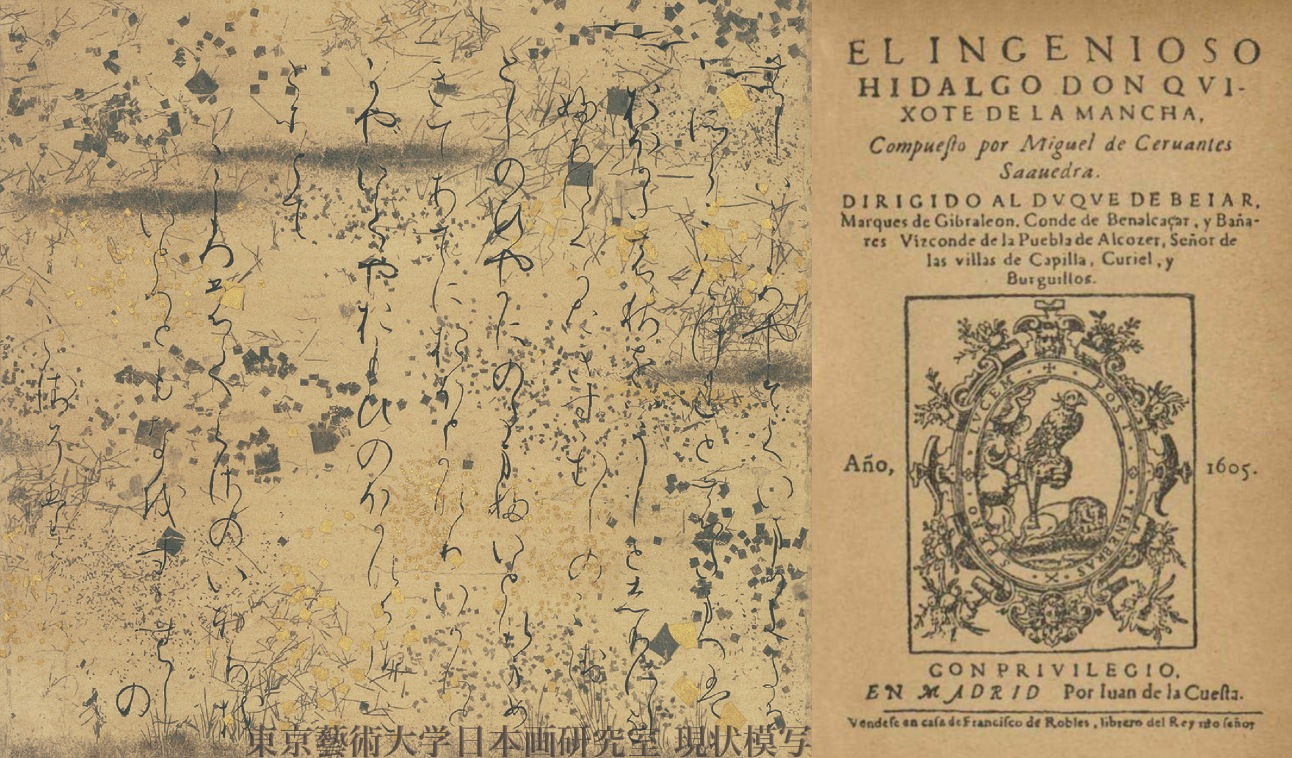
This is in many eyes the world’s first novel. I was always led to believe that Don Quijote was the first, clearly a blinkered Western view. Genji was written early in the eleventh century, some 600 years before Cervantes finished the first book of Quijote. 600 years!
Don Quijote was one of the Spanish Golden Age works I studied at university. I remember marvelling at the multiple narrators, one taking up the reins of the story as another died off; I remember the privilege of a solo tuition with Dr McKendrick, a privilege somewhat wasted on youth; and I remember her asking me over and over again about the very first sentence and what it indicated, as I abjectly failed to notice the narrator’s will and curation encapsulated in the verb querer, to wish:
En un lugar de la Mancha, de cuyo nombre no quiero acordarme
In a place in la Mancha, whose name I do not wish to recall
And yet I recall no mention of or comparison to Genji. A work which also eschews the retelling of history or myth; which contains both social and psychological realism; which spans decades through interconnected stories featuring hundreds of characters. I learnt all about Miguel de Cervantes, his life and works, but nothing of Murasaki Shikibu.
So I ploughed on reading. Through Genji’s exile and old age to the fortunes of his descendants, legitimate and illegitimate. If the first half was a tough read because of the courtly detail and love affairs, the second was tough because of the great sense of loss and the passage of time. Now I started to see what this work is all about, and marvel at this richly moving piece of literature – written by a woman, a Heian lady-in-waiting proficient in both Chinese and Japanese. I kept noticing the word evanescence, recurring like papillon in Madame Bovary. And the abrupt ending was perfect. I’ll happily buy into the argument that it is deliberate – the cycle will repeat, we do not need to be told what happens to the unresolved rivalry of Niou and Kaoru, we should know by now. I remember being shocked the first time I finished a Murakami novel where he did not concern himself with tying up loose ends. Now, thanks to Genji, I better understand both the reasons and the literary lineage.
Postscript
One thing led to another and I became curious about what it would be like to splice these two masterpieces together, so here we are:
The Shining Prince meets The Knight Errant
A site dedicated to Genji-Quijote sentence mashups. As these two worlds collide a range of strange, amusing and unlikely events are randomly created.
Genji begins to show signs of succumbing to knightly fantasies, beset by narcolepsy and madness. The graceful prince starts clumsily banging into furniture, develops a predilection for indiscriminate painting, and is perhaps not so beautiful after all. This does not stop rumours of Genji’s involvement with Dulcinea, however. And in a darker turn, Genji heads off to confront the highwaymen en route to Seville and reveals a hitherto undocumented murderous disposition.
Meanwhile, he and Don Quijote appear to have become relatives, through marriage presumably, though this does not stop them also becoming love rivals, with the knight surprisingly prevailing on this occasion. Don Quijote and Sancho Panza move in to the palace and lift everyone’s spirits, but it’s not all sweetness and light – Don Quijote despairs at the Akashi Princess’s initiation and there are times when Genji’s mockery gets under his skin and provokes fury.
Roles are exchanged as Don Quijote becomes the tearful master of Koremitsu while Sancho becomes Genji’s faithful squire and is expected to prepare provisions for his trips. But some things never change – Genji and Sancho stick to their respective preoccupations with beauty and gluttony and Tō no Chūjō and Sancho come to blows. In time Sancho gains the respect of Lady Akikonomu for his deft touch as a fictional island governor, and demonstrates the unexpected butterfly effect of untying Rocinante and pulling up his breeches. This is not an isolated event, as the famous horse also becomes an accessory to an old priest’s soothsaying.
Murasaki meanwhile prefers a younger fellow, and the Emperor shows a distinct lack of decorum in his grappling with an Asturian inn servant and undignified musical compulsions.
And when all is said and done, Genji is off to the Indies in a huff.