
1994
Marcia was intelligent, determined, motivated, committed – but learning English just wouldn’t click for her. She was one of my students at the Universidad de Carabobo in Valencia, Venezuela, and her parents engaged me for additional private lessons. Once a week I’d go to their welcoming bungalow in La Campiña only to find progress stalled despite all her efforts.
When I was at school they’d talk of people having a gift or affinity for languages, irrespective of broader academic ability. The corollary of that is that there must also be people who lack it, and here was the strongest evidence I’d seen.
If Chomsky’s theory of language acquisition is correct then Marcia’s universal grammar must have been intact, since she spoke Spanish fluently. So could this be explained as a struggle to set the parameters for a new language? Post the youthful critical learning period, was this a logical adult brain resisting and rejecting the chaos and inconsistencies of language? A psychological block, the opposite of the freedom experienced by stutterers learning a new language?
It was rather sad as she so wanted to succeed. She also struggled with some unnamed health problems which left her bow-legged, slightly emaciated and sickly. At times she had the appearance of a Dickensian child transplanted to the tropics.
The family welcomed me into their home each week, however, and showed no disappointment at my lack of ability to improve her English. One time I turned up when Marcia had been taken ill, so they took me with them to visit her in the hospital. She looked so weak and helpless.
As my time to leave Venezuela approached the mum insisted on inviting me round for a family lunch one Sunday. Whenever I was a few morsels away from finishing she would quickly pile more food on my plate. I felt I was under the spell of a plate which could never be emptied, while manners compelled me to try to do so. It got to the point where I became increasingly uncomfortable and somewhat overwhelmed, but I knew she had good intentions.
After lunch coffee was served with ceremony. The Colombian father had a smallholding back home and they were rightly proud of their crop of coffee beans; I hadn’t tasted coffee like it. Marcia’s sister’s boyfriend was a musician and set up his keyboard, leading to a postprandial singalong. We rued the fact we hadn’t met earlier in the year, a chance to do some gigs together foregone.
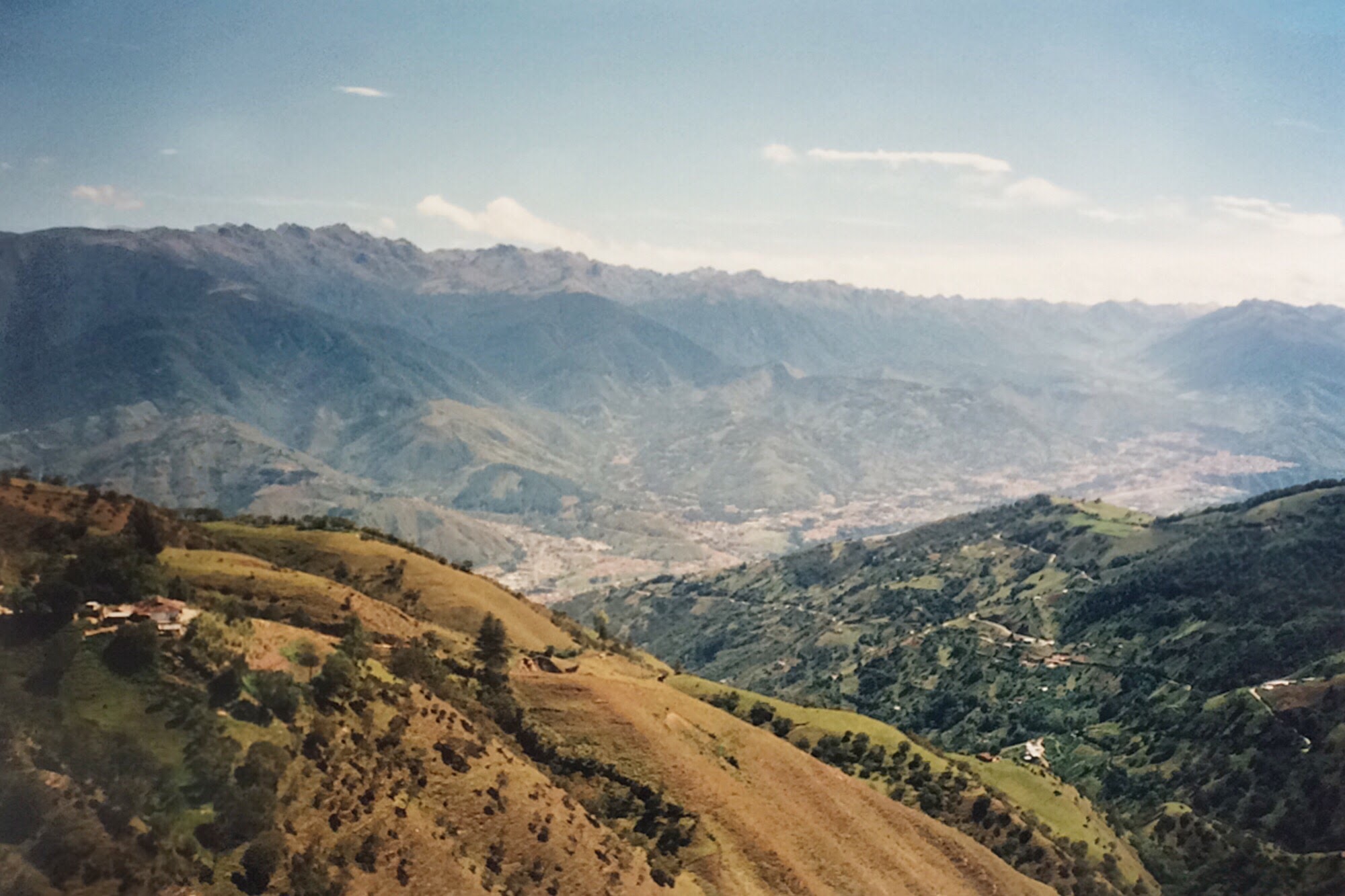
My fears outweigh my hopes, but I’d like to summon some agathism and imagine a future – largely now past – in which Marcia passes her first year exams and continues on to graduate. As the degree passes she gains strength and good health. She fulfils her dream of teaching English, finding a job at a school in the foothills of the Andes. Somewhere tranquil like Boconó or Biscucuy. The morning air is cool, fresh and invigorating on her daily walks amongst the feathery frailejones. The town is closer to the Colombian border than Valencia, shortening travel time to the family smallholding. A smallholding which is now taken care of by her husband, and which supplies the small café just off the Plaza Bolívar. Meanwhile her sister’s boyfriend forges a path as a successful session musician back in Valencia, thanks to a random encounter with Churdy.